How to Build a Shed Base (UK Ground Conditions Explained)
A shed is only as good as its base. In the UK, ground conditions vary massively (clay, sand, slopes, waterlogged lawns),
so the “best” shed base depends on drainage, stability, and the shed size.
This guide shows you how to choose the right base type and build it properly.
Choose the right shed base type
Most UK shed bases fall into three categories. Here’s when each makes sense:
UK ground conditions (what changes and why)
Before you dig, do a quick reality check on your garden. The UK commonly has:
- Clay soil: can hold water and move with wet/dry seasons. You’ll want excellent drainage and a well-compacted sub-base.
- Sandy/loamy soil: drains well but can be less stable if not compacted properly.
- Waterlogged ground: needs drainage-first thinking (gravel layer, fall away from the shed, and airflow under the floor).
- Slopes: need retaining edges or leveling (don’t “wing it” with loose packers).
Pro tip: If your lawn stays soggy after rain, don’t build a shed base straight onto bare soil.
Prioritise drainage and airflow under the floor (bearers + level base).
Getting the base size and level right
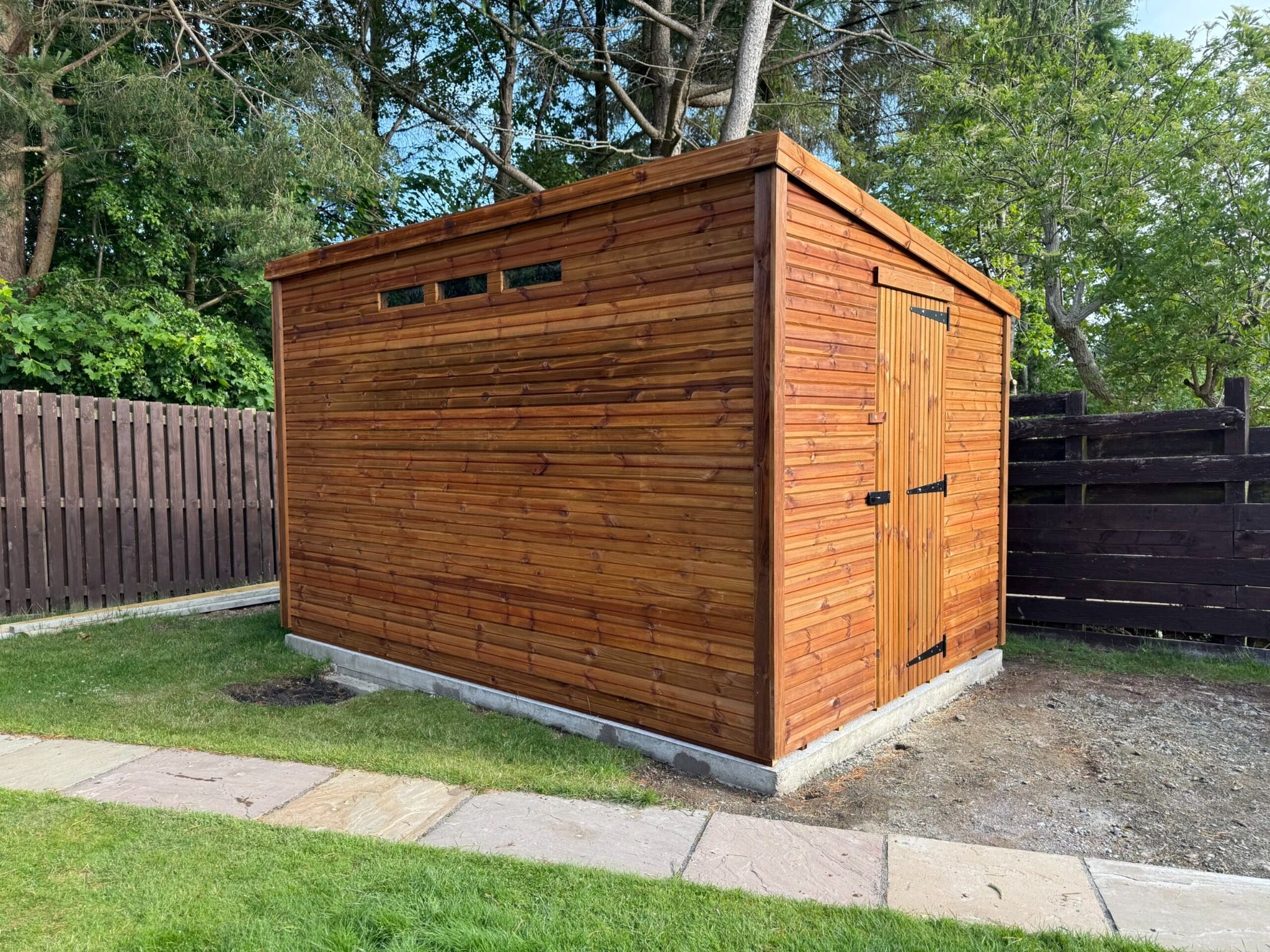
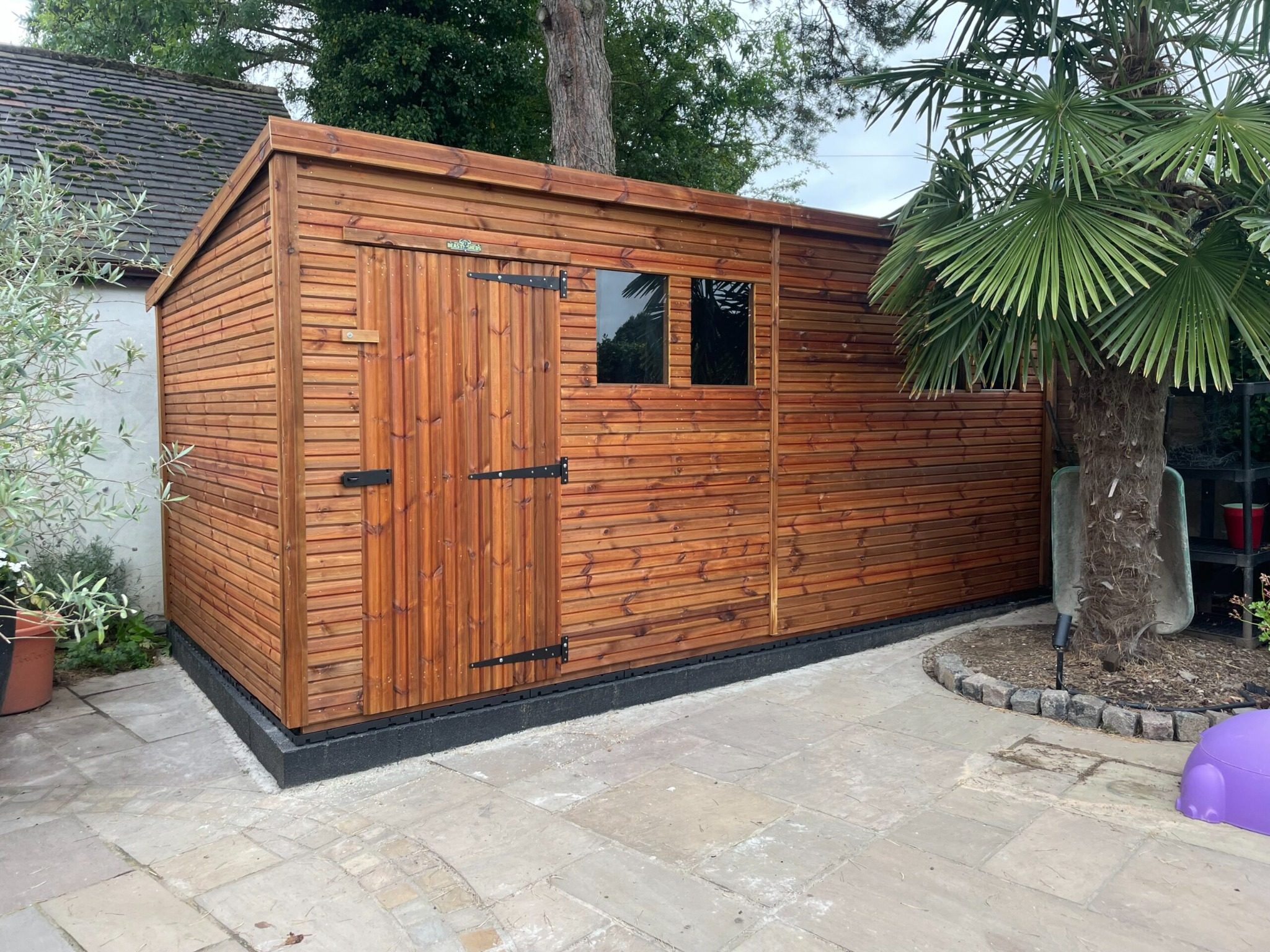
- Make the base slightly bigger than the shed: typically 50–100mm extra on each side for concrete/slabs (manufacturer guidance varies).
- Level matters more than perfection: a shed on an unlevel base twists, doors stick, and windows won’t sit square.
- Keep timber off wet ground: use bearers and a base that prevents puddling around the walls.
If you’re choosing a shed first, use the Shed Builder to lock in the size,
then build the base to suit. For ready-to-go options, browse shop sheds.
How to build a concrete shed base (step-by-step)
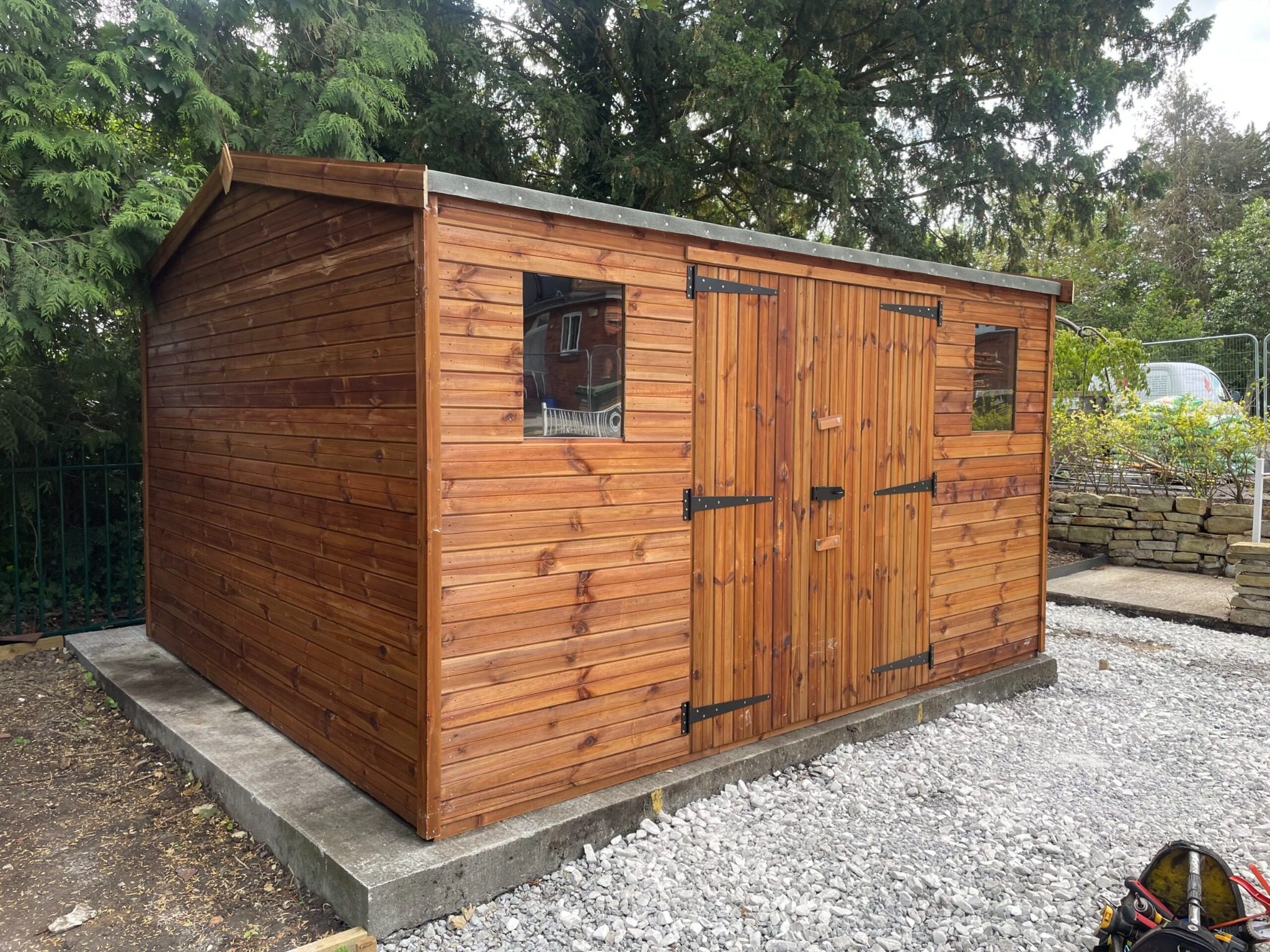
A concrete base is the go-to for heavier sheds, frequent footfall, and UK gardens with inconsistent ground.
Here’s a practical build method used for most domestic shed bases.
-
Mark out the base using string lines and pegs. Check diagonals match (that’s how you know it’s square).
-
Excavate the area. Remove turf and soft topsoil until you hit firm ground.
-
Add sub-base (MOT Type 1) in layers and compact thoroughly. This is where most DIY bases fail.
-
Add a sand blinding layer (thin) to protect the membrane and help leveling.
-
Lay a DPM (damp proof membrane) if you’re pouring concrete (helps reduce moisture migration).
-
Set your formwork and level it carefully. The concrete will follow whatever level you set here.
-
Pour and level concrete. Use a straight edge to screed level, then float the surface.
-
Cure properly. Keep it from drying too fast in warm weather; avoid heavy loads until it’s set.
Trusted guides:
Pavingexpert – Plain concrete bases and
Pavingexpert – Concrete hardstandings (thickness guidance).
How to build a paving slab base (step-by-step)
A slab base is a strong choice for medium wooden sheds and many everyday garden sheds.
It can handle UK weather well if the sub-base and leveling are done correctly.
- Dig out the footprint and remove all soft ground.
- Lay and compact sub-base (Type 1) in layers.
- Bed slabs on mortar (not just sand) for stability.
- Check level as you go using a long straight edge and spirit level.
- Finish joints and allow the bed to firm up before loading.
Best practice: A slab base can look level but still have “high corners.”
Always check across the diagonals with a long straight edge.
When gravel bases work (and when they don’t)
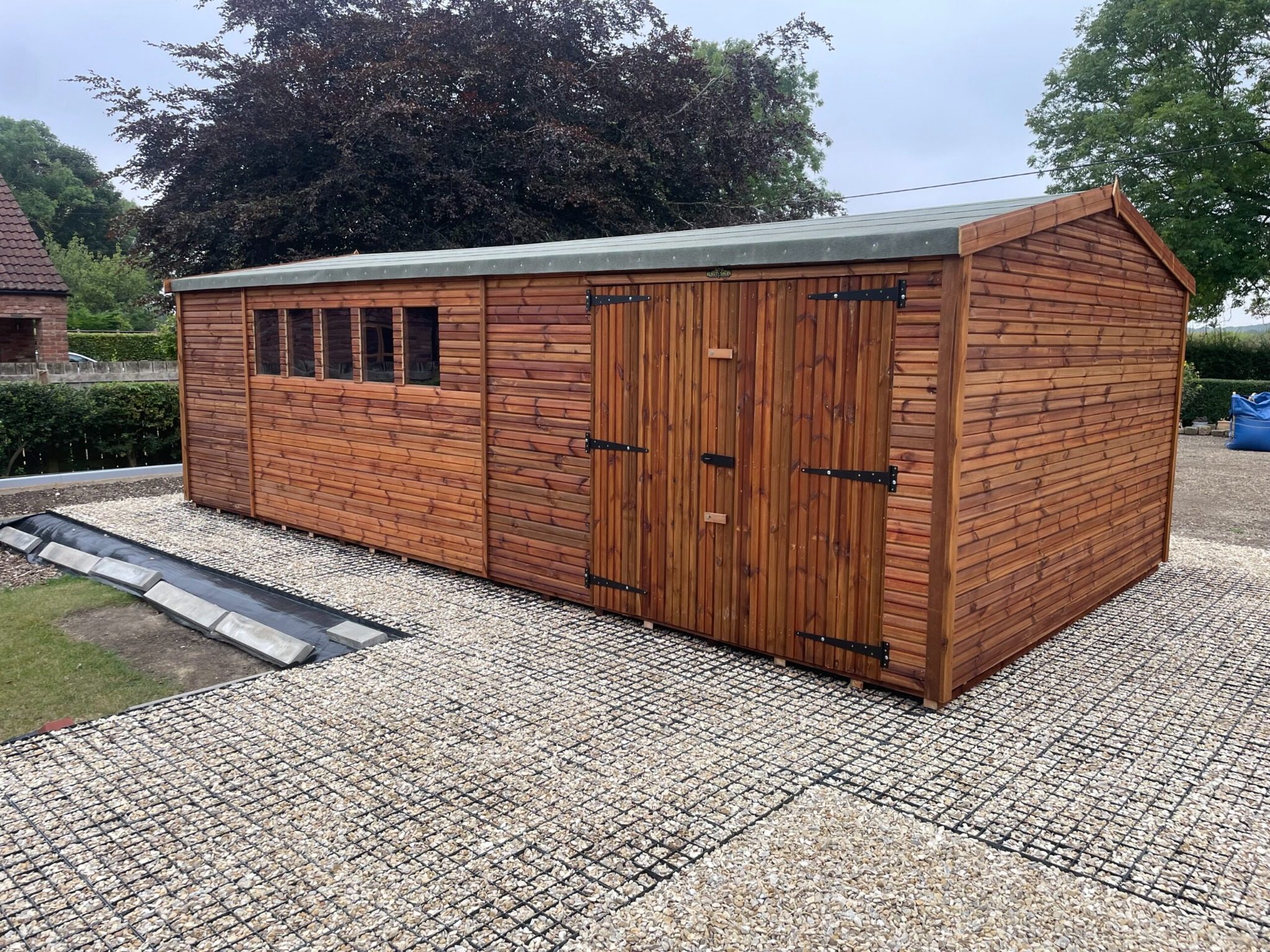
Gravel bases are popular for drainage, but they must be built like a mini driveway:
firm sub-base, proper edging, and compacted gravel.
They’re often best paired with smaller sheds like small sheds
or specialist storage like motorbike sheds.
- Works well if: your ground is wet, you add edging, and you compact properly.
- Avoid if: your site is sloped and you can’t retain the gravel, or you’re placing a very heavy workshop shed.
Common shed base mistakes to avoid
- Skipping compaction: the base settles, the shed twists, doors stop closing properly.
- Building on soft topsoil: it holds moisture and compresses over time.
- No drainage plan: water pools around the shed walls and shortens timber life.
- Base too small: edges crumble, bearers sit awkwardly, floors flex.
- Ignoring boundary rules: if you’re close to a boundary and building big, check planning/building guidance.
Planning/building regs context for outbuildings:
Planning Portal – Outbuildings planning permission and
Planning Portal – Building regs for outbuildings.
FAQs
What is the best shed base for clay soil in the UK?
Clay can hold water and move seasonally, so prioritise drainage and stability:
a well-compacted sub-base and either a concrete slab or a properly bedded paving slab base.
Avoid placing a shed directly on soft ground.
Should a shed base be bigger than the shed?
Typically yes — many installers aim for around 50–100mm extra on each side for concrete/slab bases,
but always follow the shed’s fitting guidance if provided. The key is full support for bearers/floor edges.
Do I need a damp proof membrane (DPM) under a concrete shed base?
A DPM is commonly used under concrete slabs to reduce moisture migration.
It’s especially useful in damp areas, but your full build-up (sub-base, drainage, and airflow) matters just as much.
Can I build a shed base on a slope?
Yes, but you must create a level platform (often with retaining edges).
Don’t rely on loose packers or “wedging” the shed—this leads to movement and frame twist.